
Back to blog
Before You Buy or Rent in Accra, Check the Flood Risk First
Recent heavy rains have turned flood risk into a serious property due diligence issue for Accra renters, home buyers, landlords, and investors.
By The MotherlandApp Team - Jun 29, 2026
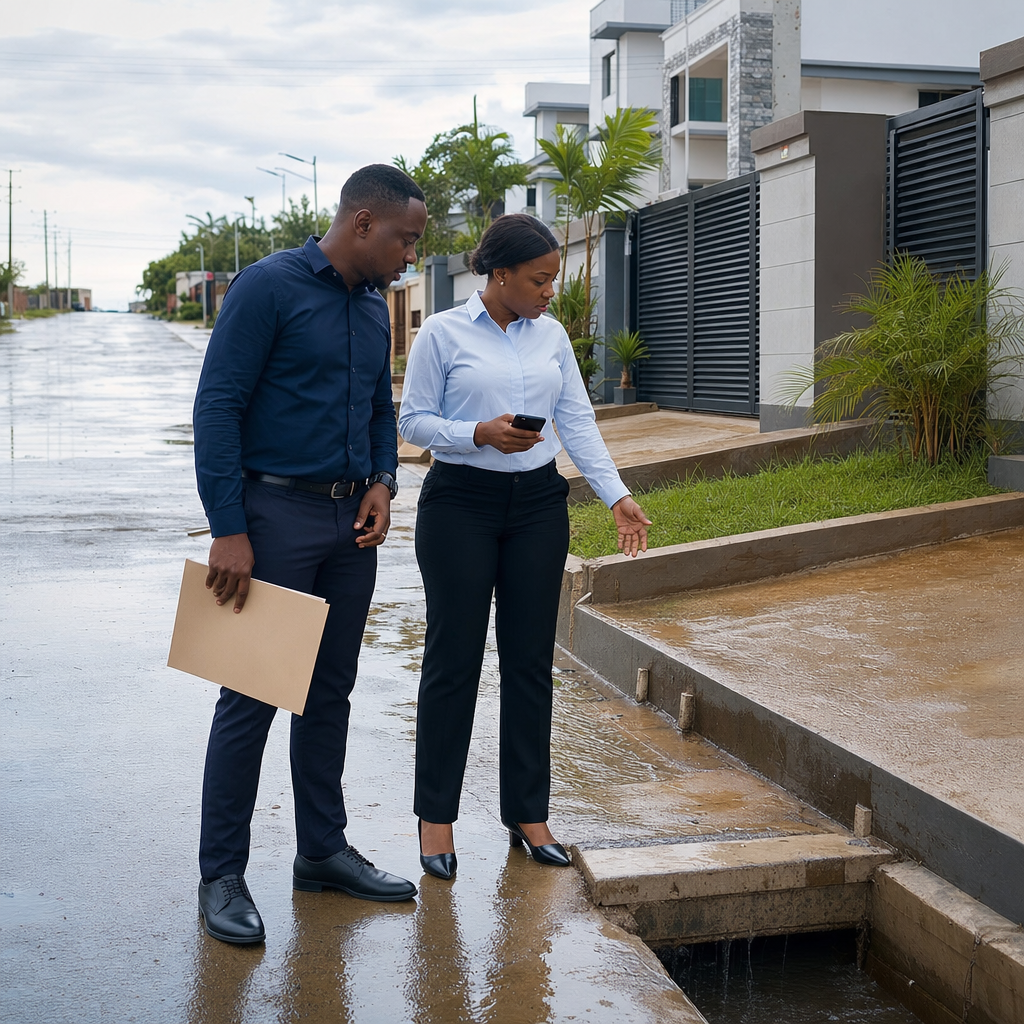
Why this matters now
Accra's rainy season has become more than a weather issue. It is now a property decision issue.
In June 2026, the Ghana Meteorological Agency warned that Accra faced heightened flood risk, with projected rainfall of 100 to 150 millimetres across the Coastal Zone. GMet also noted that parts of Accra can now flood after relatively modest rainfall because the city's ability to absorb and drain water has reduced over time.
That warning has already been followed by real disruption. On June 29, JoyNews reported severe flooding in Afienya after overnight rains, with residents trapped in homes and traffic disruption along the Afienya-Tema road. Earlier in the month, the Greater Accra Regional Security Council listed several flood-prone communities for heightened monitoring.
For anyone looking for a home, land, rental property, or investment unit, the lesson is simple: location is not only about proximity to town, school, beach, or airport. It is also about drainage, elevation, road access during rain, and whether the land sits in a natural water path.
The areas buyers and renters should watch closely
REGSEC's June 2026 alert mentioned several communities and catchment areas needing special attention. These included Odawna and Official Town in Adabraka, Sahara in Dansoman, parts of Alajo, Berlin Bridge and Downside in Nima, parts of Madina, parts of Osu, parts of Abelemkpe, and drainage catchments in Weija-Gbawe, Ga West, and Ga East.
This does not mean every house in these areas is unsafe. Flooding is often street by street, plot by plot, and drain by drain. A house on a slightly raised side of a community may perform very differently from another house a few minutes away.
That is why property seekers should avoid judging flood risk by neighbourhood name alone. The correct question is not only, "Is East Legon, Madina, Dansoman, Afienya, or Tema safe?" The better question is, "What happens on this exact street after heavy rain?"
Flood risk can affect value, rentability, and resale
Flood risk can quietly reduce the real value of a property even when the building looks attractive. A tiled compound, fresh paint, fitted kitchen, and modern gate do not solve a drainage problem.
For buyers, flooding can mean repair costs, mould, damaged furniture, weak foundations, blocked access roads, higher maintenance expenses, and difficulty reselling later. For renters, it can mean lost belongings, health risks, stress during every major rain, and transport problems when roads become impassable.
For landlords and investors, flood risk can affect tenant retention. A tenant may accept a property in January when the road is dry, then refuse to renew after the first major storm. Short-term rental guests may also leave poor reviews if access roads flood or power and water systems are disrupted.
The financial stakes are high because Accra remains Ghana's most expensive major residential market. Ghana Property Centre's May 2026 snapshot placed the median house sale price in Accra at about GH₵1.8 million. At that level, skipping flood checks is not a small mistake.
What to check before paying for land, rent, or a house
Before you commit, inspect the property during or shortly after rain if possible. If you cannot, ask for recent videos of the street, compound, drains, and access road during rainfall.
Speak to nearby shopkeepers, tenants, security guards, and residents. They often know the truth better than the sales brochure. Ask direct questions: Does water enter the compound? Does the road flood? How long does water stay after heavy rain? Have cars ever been stuck here? Have tenants moved out because of flooding?
Look at the physical signs. Water marks on walls, raised electrical sockets, newly patched lower walls, damp smells, cracked floors, eroded soil near foundations, and unusually high entrance steps can all be clues.
Check the drains around the property. Are they open, blocked, too narrow, or absent? Does the property sit below the road level? Is it close to a stream, lagoon, wetland, major gutter, or retention area? If the answer is yes, proceed carefully and get professional advice.
For land buyers, do not rely only on the site plan and the seller's assurance. Confirm planning status, road reservation, drainage reservations, and whether the land sits in a protected or natural waterway area. Ghana News Agency reported that NADMO linked Tema West flooding to unauthorised construction along waterways, poor sanitation, and illegal development in protected zones.
What landlords and sellers should do now
If you own property in a flood-prone area, do not wait for buyers or tenants to discover the problem. Fix what can be fixed. Desilt drains, raise vulnerable entrances where appropriate, improve compound slope, repair damaged gutters, and keep records of any drainage work done.
Be transparent with serious tenants and buyers. A property with known flood history can still be rented or sold if the risk is properly priced, disclosed, and managed. What creates bigger problems is silence, especially when a tenant discovers the issue after paying a large advance or a buyer discovers it after completion.
Landlords should also review maintenance responsibilities with tenants. Clear expectations around drain clearing, waste disposal, compound cleaning, and reporting blocked gutters can reduce avoidable flood damage.
The MotherLandapp view
Flood risk should now be part of every serious property search in Greater Accra. A good listing should help people understand not just bedrooms, bathrooms, finishes, and price, but also the practical living conditions around the property.
For buyers and investors, this means adding flood checks to title checks, price comparisons, developer background checks, and inspection reports. For renters, it means asking hard questions before paying advance rent. For landlords, it means treating drainage and rain resilience as part of property quality.
The best property decision is not always the cheapest or the most beautiful. It is the one that remains livable, accessible, and valuable in both dry season and rainy season.
What this means for buyers, sellers, and investors
Buyers should inspect the exact street and drainage conditions before making an offer, especially in low-lying parts of Greater Accra.
Renters should ask neighbours about rainy season access before paying rent advance.
Land buyers should verify that the plot is not in a waterway, buffer, or protected drainage area.
Landlords should improve drainage and document maintenance, because flood resilience can protect rent value and tenant confidence.
Investors should price flood risk into projected returns. A property that floods can lose rental demand even if it is in a popular location.
Sources
- More floods loom for Accra as GMet predicts heavy June rains, Graphic Online
- Greater Accra REGSEC lists flood-prone areas as GMet forecasts 100 to 150mm rainfall in June, MyJoyOnline
- Hundreds trapped as floods submerge Afienya after a night downpour, MyJoyOnline
- NADMO blames unauthorised construction, poor sanitation for Tema West floods, Ghana News Agency
- Average property prices in Ghana, May 2026 snapshot, Ghana Property Centre