
Back to blog
Ghana’s low-carbon housing pilot is a practical signal for buyers and self-builders
A new UN-backed sustainable materials project in Ghana could influence how future affordable homes are built. Here is what buyers, builders, landlords, and investors should watch before paying for land, construction, or a new home.
By The MotherlandApp Team - Oct 26, 2026
What happened
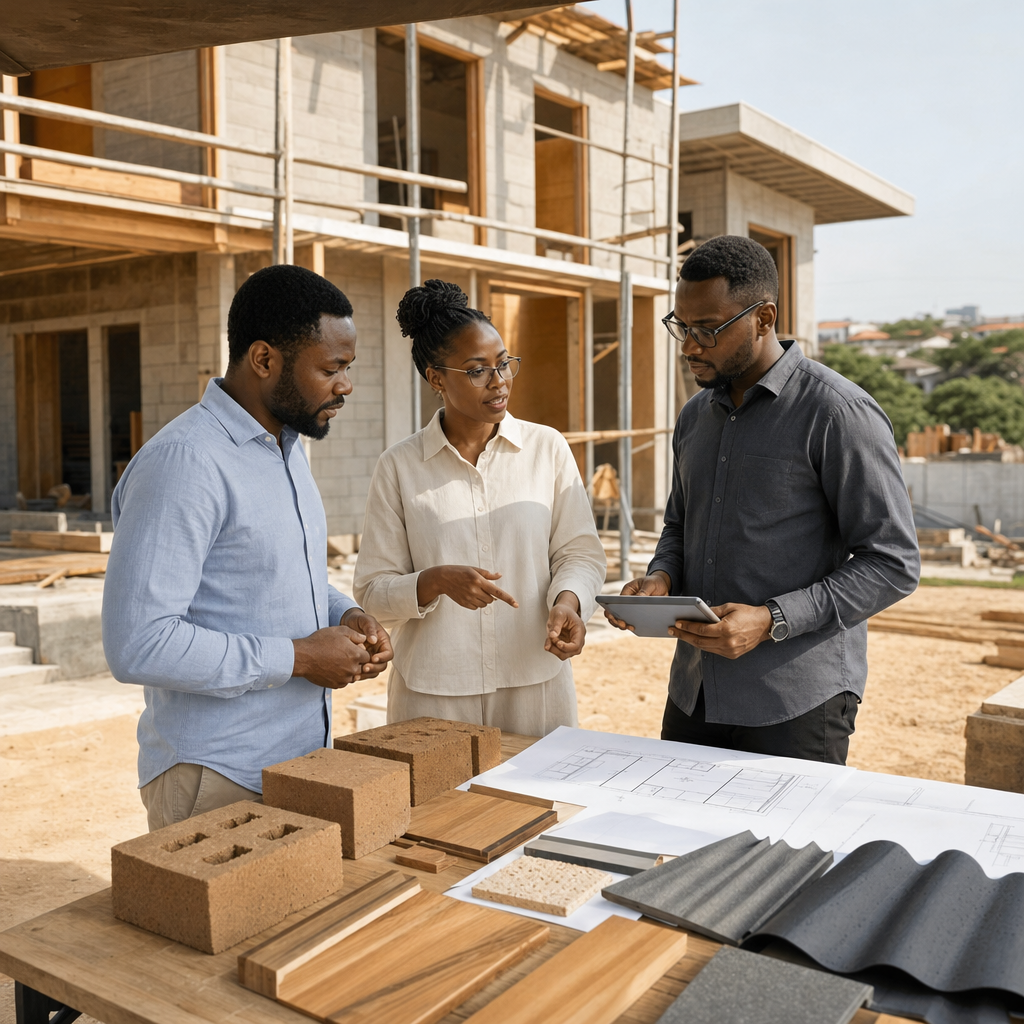
On 22 October 2026, the Ministry of Works, Housing and Water Resources, together with UNEP, UNOPS, and UN-Habitat, launched the Transforming Ghana’s Built Environment Through Sustainable Materials Demonstration Project.
The project is meant to test and promote low-carbon building materials, support affordable housing, and put Ghana’s 2050 Construction Sector Decarbonisation Roadmap into practice. According to UN Ghana, the launch also included a validation workshop where stakeholders reviewed feasibility work, financial analysis, and a draft compendium of locally available low-carbon building materials.
This is not just a climate story. For ordinary property seekers, it is a construction quality, affordability, and future maintenance story.
Why this matters for Ghana property decisions
Many Ghanaian buyers focus first on land title, location, road access, and price. Those checks are still essential. But the next big question is how the home is actually built.
If Ghana begins to scale more local, lower-carbon, and resource-efficient materials, buyers and self-builders may start seeing new options in affordable housing projects, district housing projects, and private developments. The practical issue is simple: a cheaper home is not automatically a better home, and a green home is not automatically cheaper. Buyers need to ask what materials were used, who certified the design, what maintenance is required, and whether the building performs well in Ghana’s heat, rain, humidity, and power cost environment.
The project also matters because Ghana’s housing deficit remains large. UN Ghana linked the demonstration project to a deficit of more than 1.83 million housing units. If new building methods can reduce waste, improve energy efficiency, and use more local inputs, they could help developers deliver better homes over time. But the benefit will depend on execution, regulation, skilled labour, and transparent pricing.
The cost angle, do not confuse innovation with instant affordability
Construction costs are still a live concern for anyone building or buying a newly built home. Ghana Statistical Service released its August 2026 Prime Building Cost Index materials, and Citi Newsroom reported that building cost inflation rose to 4.6 percent in August 2026, up from 4.0 percent in July. The same report said materials remained the biggest contributor to the increase, while plant and equipment costs were an emerging risk.
That context is important. A low-carbon materials pilot does not mean home prices will fall immediately. It means the market is beginning to test alternatives that could influence costs, supply chains, and building standards later.
For self-builders, the lesson is to keep your bill of quantities current. Do not rely on a quotation that is several months old. Ask your contractor to separate labour, materials, transport, equipment, finishes, and contingency. If a contractor proposes an unfamiliar block, panel, roofing, walling, or insulation system, ask for performance information and proof of prior use.
What buyers should ask about a new development
If you are viewing a newly built house or apartment, especially one marketed as sustainable, green, affordable, efficient, or climate-smart, ask direct questions.
First, ask what the main walling and roofing materials are. Then ask whether the design has any recognised certification, professional sign-off, or independent review. UN Ghana noted that three local housing prototype models received international EDGE Certification at the launch event. That does not mean every project in Ghana now has certification. It means certification is becoming part of the conversation.
Second, ask about heat and ventilation. A building can look modern but still become uncomfortable if it has poor orientation, weak ventilation, excessive glass, or roofing that traps heat. A good home should reduce heat stress and help control electricity costs.
Third, ask about water, drainage, and maintenance. Green building is not only about materials. It should also consider water efficiency, waste, durability, and long-term repair costs.
Fourth, ask whether the developer can explain the material choices in plain language. If a seller cannot explain what was used, why it was used, and how it should be maintained, treat that as a warning sign.
What landlords and investors should watch
For landlords, sustainable construction could become a rental advantage if it leads to cooler rooms, lower utility use, better ventilation, and lower maintenance. Tenants are not only comparing rent. They also compare comfort, water reliability, electricity bills, dampness, road access, and building condition.
For investors, the question is not whether every green claim should attract a premium. The question is whether the building has measurable advantages. A unit with lower operating costs, durable finishes, good drainage, and reliable documentation may be easier to rent, easier to maintain, and more defensible when tenants compare options.
Be careful with marketing language. Words like eco, smart, sustainable, green, and climate-friendly are easy to print on a brochure. The real value is in drawings, specifications, approvals, certifications, warranties, and the lived performance of the building.
What self-builders should do before choosing alternative materials
If you are building your own house, do not reject new materials automatically. Also do not accept them blindly.
Ask your architect, engineer, or quantity surveyor to compare the proposed material against conventional options. The comparison should include upfront cost, transport, skilled labour availability, structural suitability, fire safety, water resistance, thermal comfort, maintenance, and resale perception.
Also confirm that the district assembly approval process will accept the proposed design and materials. The CTCN work on Ghana’s green building guidelines and standards shows that the policy direction is moving toward clearer sustainability standards, but individual projects still need proper approvals and professional supervision.
Finally, build a small risk allowance into your budget. New materials can save money in some situations, but they can also create delays if suppliers, artisans, or inspectors are not familiar with them.
The MotherLandapp takeaway
This new demonstration project is a useful signal, not a reason to rush into any project labelled green. Ghana’s housing market needs more supply, better quality, and more realistic affordability. Sustainable local materials may become part of that solution, especially if they reduce dependence on expensive imported inputs and improve building performance.
For now, buyers and investors should treat green building claims as another due diligence item. Verify the land. Verify the developer. Verify the approvals. Then verify the building method.
What this means for buyers, sellers, and investors
Buyers should ask for material specifications, approvals, professional sign-offs, and any certification before paying for a newly built home.
Self-builders should compare alternative materials carefully and update construction budgets with current prices before starting work.
Landlords should watch for homes that offer better comfort, lower operating costs, and easier maintenance, because these can support tenant retention.
Investors should not pay a premium for vague sustainability claims. Pay attention to evidence, durability, location, rental demand, and long-term maintenance.
Developers should expect buyers to become more informed. Clear specifications, credible certification, and transparent construction choices can become a competitive advantage.
Sources
- UN Ghana, UNEP, UNOPS, UN-Habitat, and Ministry of Works, Housing and Water Resources Launch Demonstration Project to Transform Ghana’s Built Environment
- GlobalABC, Transforming the Built Environment Through Sustainable Materials, Ghana
- Climate Technology Centre and Network, Development of Green Building Guidelines and Standards for Ghana
- Ghana Statistical Service, August 2026 Prime Building Cost Index Release
- Citi Newsroom, Building inflation rises to 4.6 percent despite cheaper cement, steel and labour